Archive for the ‘health’ Category

When being too tired is an emergency

night light

I write with little energy.  I cannot communicate with my favorite blogging friends for now.  What I thought was a severe episode of chronic fatigue syndrome and with it, some serious brain fog, is unfortunately more than this.

I went to the ER because I was exposed to pneumonia followed by a weird chest pain with a new cough.  The fatigue had worsened and the brain fog turned into confusion.  I couldn’t do my paperwork.  I got scared.

I don’t have pneumonia but was admitted to the hospital so they could watch my heart, which they did.  They watched it run slowly all night. It stayed between 45 and 50 beats per minute until the nurse came in at 3am with the maintenance man to fix the heater’s thermostat, which wasn’t broken.  It did go up then but not for long.

They discharged me early, partly because I had begged.  I can’t leave my dogs.  I have bills to pay.  Things that must get done this week.  I agreed to follow up with doctors, which I’ve done as I write.

Right now I’m like my sister’s cell phone was a few minutes ago — working with only one bar.

My discharge papers reads, “Sinus bradycardia.”

What I know is I’m dead tired.  I got to where my fingers couldn’t type.  I couldn’t pick up the telephone when it rang and it was beside the bed!  I couldn’t do anything.  I knew I had to seek help.

After monitoring my heart all night, then having a few conversations with a very good doctor, he decided that the slow heart rate is a nutritional problem.  He believes that I’m not eating enough.  He may be right.

When I said I had a broken heart, well, I guess it goes to show that our emotions are very much a physical part of being human.

I had a lot of grief over the past year.  I had many changes too.  Lately, things have actually been changing for the better, but I guess life gave me a bit more sadness than my heart could take.

The sadness I have gone through reminds me of the Kudzu that grew in the mountains where I lived, as well as where I live now.  You pretty much have to go in and blast the foundation to get rid of this plant.

The new leaves are supposedly nutritious and can keep a person alive.  I think there are medicinal uses for the plant, but of course, I can’t remember what they are.  I’m running on low.  I do remember that you can only eat the fresh leaves in the springtime, otherwise it is a poisonous plant.

I had myself a session with a psychopath, exposing me to an awful growth of toxins.  I ate from the autumn vines with the darker bigger and poisonous leaves and they made me sick!

Hopefully, and I am hopeful as I write, I think simply from having written, I will heal and very soon.


I’m talking about Pain.

In the wee hours of the morning, around 3:30 am today, I woke up.

I was fatigued and had fallen asleep last night, forgetting to take my pain medication and my anxiety medication, both of which I need, the latter of which is for anxiety, but also manages a neurological disorder I have, an essential tremor.

I don’t remember the details of my waking in chronological order.  I remember having the thought that I should definitely update my will.  I remember being scared.  I was really scared.

The pain in my chest and lungs is what was the most scary I guess, but all of it was bad.  My entire body, once again, felt like it was on fire.  It’s more than fire though.  It’s more than a burning.  It’s so much more I don’t seem to have the words for it.

They call it fibromyalgia.  I wonder.  Sometimes I wonder what my doctor would do if I was his daughter.   He has three and often speaks of them.  He is a compassionate man and I like him.  So I’ve wondered this.

Would he take me to some fancy medical facility up north?  Could they help me?  I know he would pay for acupuncture treatments, which helps me tremendously, but I can’t afford them.  He once told me he would like to learn acupuncture himself.  I told him I needed him to keep on being my doctor instead of going off to acupuncture school.  He laughed.

But my good doctor was not here at 3:30 am when I woke up this morning nor was anyone else, except my dogs, my blessings from the universe.  They were here and their being here makes a big difference in my ability to remain sane in such a state as I found myself in this morning.

Not only was I in pain but the tremor was there.  My insides were shaking.  I was sweating a little.  The pain was so intense I had to lie there and get my breath enough to be able to get up and go take my medication.

I lied there for a few more minutes before getting up.  I guess I was in shock.  My lungs hurt when I breathed, which I could barely do.

I’ve been told that the pain I experience in my chest area and when I breathe is from fibromyalgia.  They tell me that the heart is a muscle, which I already know that, and talk about the connective tissue around the heart and lungs, but they have also told me it’s rare to have the kind of serious pain I have while breathing.

Without the medication I can’t breathe.  It hurts too bad.  This is scary and I don’t think the doctors are aware of how serious it is for me.  I guess I need to tell my doctor but what would I say?  He knows I live in pain.  He gives me medication.  Maybe I’m afraid he will say my pain is too much for him and would send me away.  Send me to some pain clinic where I’ll be a number and/or where they might not believe in fibromyalgia.

Yeah, I am scared.

The fibromyalgia doctor I saw twice said sometimes it does get into the lungs and that this is almost like a medical entity of it’s own.  Great I thought.

It’s scary because I think what if something happened?  I live alone and what if I forgot my medication and couldn’t get to it?  I have a phone and I would dial 911, but would they believe me if I told them I couldn’t breathe without my medication?

There is stigma around pain medication and medical professionals are not immune to it.

What would I say if I did dial 911?  I have fibromyalgia.  I can’t get to my medication.  I can’t breathe without it.

Would they think I’m a drug addict?  A hysterical woman?  A psychiatric case?  I wouldn’t be a “drug-seeker,” because I have the “drug.”

It took about thirty minutes for the medication to work.  I could breathe again.  I don’t remember now what all went through my mind during that time, other than thinking about updating my will, but I know a lot did.

It was a painful, scary and depressing experience, but it’s over…or is it?


Horses healing hearts

Horses heal the mind, body and spirit

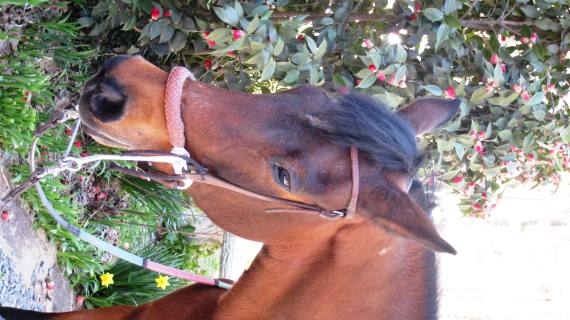
Candy, A Morgan

Wow!  OMG!  Totally Awesome!

Those are the words that first come to mind as I write, recalling my ride today.  

Today I met a Morgan horse named Candy.  I couldn’t believe her name was the same as the Appaloosa that I rode last summer.  I loved that Appaloosa, who was a very spunky girl and today, I loved Candy the Morgan horse, who was tender, sweet and did exactly everything I asked her to do, and then some!  I mean, some things I asked her to do I didn’t realize I had asked for because I’m an amateur rider.

The trainer showed me how Candy was keen to my every move, such as barely moving my foot in the stirrup, which told Candy to slow down a little. Candy was sweet and intelligent.

I also learned that gently pulling back one side of the reins, while giving a little on the other side controlled Candy’s speed during a trot.   Instead of bouncing up and down, afraid of falling, I was able to move gracefully with her.  This was an awesome feeling.  It was exciting too.  It was most likely my favorite part of the lesson.

The trainer told me I was doing a great job.   She said she was surprised at how well I did during the trot.  I’m sure she had no clue how much this meant to my self-esteem hearing her say that.  I felt good about myself in that moment.  It was a healthy sense of control in a time when most everything in my life feels completely out of my control.

Aside from enjoying the ride there is a relationship that you develop with a horse and it doesn’t take long — only a few minutes.   It’s amazing how much a horse listens.  The simple act of holding out my pinkies, which I didn’t know about,  slowed Candy down.

While I’m certainly tired from the ride, there is a smile on my face as I write.  My spirit feels good.  I don’t feel like a complete failure.  Candy sure helped me.

Morgan horses are so sweet!  They are much like dogs.

Candy, a very sweet girl!

“Morgan horses are kind of like dogs,” the trainer had said when I first arrived at the farm.   I walked through the barn and met the other horses while she saddled up Candy for me.  One of the Morgans especially reminded me of dogs.   She kept nuzzling her big pretty head up against the bars appearing to desire a scratch behind the ears, just like a dog.  I gave her a scratch and she kissed my hand, just like a dog.

I had a great time!

Now I must go rest and dream of my meeting with one of the sweetest horses in the world!

Candy lives at a farm in North Carolina.  This farm does not offer or include in their lessons equine-assisted therapy.   Any therapy I received I captured on my own.

I’m not a doctor or a medical professional, nor am I offering advice on treatment for depression.   I simply want to share my experience and tell how riding a horse, along with the relationship that is created, is great therapy for me in my journey to fight chronic sadness, frustration, illness, grief, and often, a loss of interest in things I would otherwise enjoy.

Antidepressants don’t always come in a pill.

(update on Monday, March 22, 2010) —  Lots of stiffness and sore muscles since my ride, but today I’m doing better.   I stayed in bed most of the 24 hours after the ride.  I also had to take anti-inflammatory medication but to me, it was totally worth it.

Physical strength isn’t a requirement to ride on a gentle horse.    I didn’t have to lift the saddle, which was a good thing and I chose to trot, which I’m sure added to the aftermath of pain.

Compared to the side-effects I have from antidepressant medications, the short-lived flare of the sore muscles and fatigue is not a big deal to me.

The extra pain will go away and the gifts Candy and her trainer gave me will stay.


Fibromyalgia, Severe Pain and Injuries

It hit my legs first.  I felt it deep in my bones when I lied down.  The pain felt like the beginning of a tooth ache.  I changed positions and fell asleep.  Several hours later I woke up with my eyes wide open.  The pain was intense.  I thought I was having a nightmare, but I wasn’t.  It was real.

"Yikes" Fun image by Leslie Sigal Javorek at IconDoIt, the blog!

YIKES!!!

IMAGE CREDIT: Leslie Sigal Javorek, IconDoit, the Blog!

The severity of pain lessened dramatically when I got up and moved around.  I was in that state of mind where I wasn’t fully awake, yet like a dream, or nightmare, I had more of a feeling than a detailed memory afterward.

fibromyalgia severe pain invading every cell

The memory of the deep pain I woke up with evoked an image in my mind.  I imagined thousands of little creatures; their legs strong and claws sharp; grasping and gnawing at the fibers in my legs; having invaded every cell.

By mid-day my upper body started hurting again.  By the end of the day, I found myself crying.  I realized there was more going on than the regular level of pain I live with.

I put Lidoderm patches on the places that hurt the most and took breakthrough medication; extra pain medication that I don’t normally have to take.

I didn’t know what to think.  Was it my lungs or the connective tissue around my lungs, I wondered?  The pain in my upper back, like the pain in my legs earlier that morning,  was  so deep and inclusive that I couldn’t tell if it was bronchitis or muscle pain.  My muscles felt bruised.  Breathing hurt.  I hurt all over, inside and out.

The patches and extra medication helped and the next day I was able to take the dogs for a walk.  My young, but strong dog, pulled my arm.  A surge of pain moved through the center of my back, which is when I remembered a dog walk two days before this new pain hit my body.

The dogs had spotted our neighbor.  They adore her and hurled forward when they saw her.  I held the leashes, running behind them for ten or twenty feet.  It had hurt, but the worst of the pain was yet to come.

One event like this can cause a flare up of fibromyalgia pain that might last a couple of days or a few weeks.  Injuries can cause severe flares and pain levels to permanently increase.  

Due to post-exertional pain and fatigue, the smallest of chores or tasks can cause days of illness.  I’m not good at pacing because the ideal rate of speed is so slow, but I’ve learned the consequences of over doing things.

Moving into my apartment caused me so much pain that I had to go on a different and stronger medication after it was all over.  Planting five plants in my yard two summers ago put me in bed for the best part of a month.  Falling from my bicycle on Halloween caused me to go, “on a tendon and ligament adventure,” as my doctor remarked.  Not long after the bike accident, while cleaning a ceramic cabinet knob, I endured severe and deep cuts to two fingers. 

Yikes!

Injuries that other people get over fairly quickly can cause flare ups and become chronic pain conditions for a fibromyalgia patient.

Pain is pain.  Living with it is hard and sometimes, depressing.  Pain can be physically, mentally and emotionally completely consuming.

I cannot imagine not having medication that relieves the intensity.  I simply can’t.  I seriously think that my body would probably go into shock or I would have a heart attack from pain.

Before Medication…

I took my dogs along with me on a camping trip to one of my favorite places in the mountains.   A friend had come to help me set up camp.  It wasn’t easy and it rained, but I knew the weather would clear soon.  The morning would bring beautiful bird songs, close views of the white-tailed deer who legally own the place, and because of the few number of campers, the sounds of nature would wake me upon the first shadow of light.

I woke up around 2am in more pain than I had ever felt before.  I sat there for several hours, literally crying in pain.  Before meeting the beautiful morning I had anticipated, I had concluded that I could not continue to live with the pain I was experiencing. 

My thoughts had gone downhill for sure.  I felt that anyone who expected a person to live with that kind of pain seemed inhumane.  I wanted the same compassion as my dog had been given when we learned she had bone cancer.  My tail wasn’t wagging anymore.  I wasn’t laughing anymore.  Food didn’t matter anymore.

That weekend changed my life.  I had been ready to die.  Fortunately, I had a good doctor who told me to try taking a pain pill.  I did and it worked.

I realized better what a toll the constant pain had taken on me and my life, after finding relief in medication. 

Taking pain medication doesn’t necessarily mean you are out of pain.  I think many people simply want to reach a tolerable level of pain they can live with.  Most people I know who live with pain want very much to function as much as possible.

I have pain-free days, but most of the time I have some level of pain.  My muscles are usually tender.  My body usually feels bruised. 

I have flares, but I’m truly grateful that I don’t have to live every moment of my life in severe unrelenting pain.  I’m also grateful to have a doctor who understands very well that fibromyalgia hurts.

Thank you for visiting DogKisses’s blog.

All content on this page, including text, images and external links are subject to A Creative Commons Attribution-NonCommercial-Share Alike 3.0 United States License.  See my sidebar for more information as to Terms of Use.

Post edited and updated on the eleventh of April, 2013

Schizophrenia and forced treatment.

A Beautiful Free Spirit, A and B Larsen orchids, Wiki Commons

  PHOTO CREDIT:  Arne and Bent Larsen via Wiki Commons

I was hopeful when my son began receiving services with an Assertive Community Treatment (ACT) team, even though the way their relationship came about was not the perfect situation.

My son was in the hospital, having been admitted to the wrong floor.  The inpatient attending physician wasn’t happy to learn that he’d been admitted to her unit over the weekend when she wasn’t working.  The unit was for treating “disorders” such as depression and perhaps bipolar.  The other unit is where a patient went if he or she made reference to or exhibited signs of hearing voices, having hallucinations and/or signs of a cognitive thinking process deemed abnormal or delusional.  

The treating psychiatrist had a poor attitude.  She admitted to me that she had told my son that if he said anything she didn’t like, she would send him to another hospital that was not as desirable as the one he was in.

During a meeting she told my son the only way he could get discharged right away was to agree to sign on with an ACT team, which is what he did.

Before entering the hospital he’d been working with another team of mental healthcare providers that we both liked, but he was rebelling and not conforming to rules, after having been transported from the place we had called home for about six years. 

I felt that the earlier team gave up on him when symptoms of the illness they were treating him for flared, but they said the ACT team could serve him better.

Several years have passed since then.  I can’t be sure the good outweighs the bad in our personal experience of having ACT services.  There were good social workers who my son was very fond of, but they didn’t have much time.

Communication with this ACT team has been frustrating so much of the time.  For extended periods they’ve neglected my son.  They call this being, “engaged observers,” and always have either an excuse, such as too much paper work to get to him, or they blame him for not being easy to find on the downtown streets, which is how they often catch up with their clients.

I communicated with them once that my son needed help.  They agreed.  He was not doing well.  Their approach that time was to suggest that I leave him alone, at least for a couple of weeks or, “however long it takes for him to deteriorate,” his social worker suggested.  I liked the social worker, but I didn’t like the suggestion.

My son was living alone and certainly needed help.  I needed help helping him.  He was not, “sick” enough to be committed to a hospital psychiatric unit at that time.  The idea was to get him some help if he was an inpatient, they said.  I’ve since learned that this means forced medication.

The social worker told me they (his ACT team) believed that me inviting my son to my home, where we would have dinner and spend time with the dogs, one of whom is his, was helping him to stay well or rather, not letting him deteriorate to the point where they could have him involuntarily committed.  They suggested that I stop visiting him or inviting him to my house. 

“Just don’t answer the phone if he calls,”  a social worker told me.

I think this social worker had good intentions, I guess, but he just didn’t get it.  He didn’t have children yet.  None of the social workers on the team had any and many of them are younger than my son is.  We need some elders in these jobs.

ACT teams strive to keep people (consumers or clients) out of hospitals and in the community, but involuntarily commitment remains a common practice for social workers and ACT teams.

We were all in agreement that one of my son’s assets and at that time, probably his only asset was family involvement.  I am his family.  And our two dogs.

Their evidence-based treatment submits that patients who have family support fare better than those who don’t have it.

The ACT team have suggested several actions they believed would help my son since they became my son’s treatment team, a few of which made sense and some of which, I felt that I had no alternative but to agree with. 

I couldn’t go along with what felt to me like abandoning my son so he would get sick enough for a commitment.  I tried it for about a day and a half.  I decided not to go against my gut and my mother’s instinct.  I would not take away the only connection my son had to the outside world so that he would get worse.  Nothing about it makes good sense to me.

“You won’t always be around,” I was also told.

“Well, I’m not dead yet!”  I told the young social worker.  I’m not even a senior citizen yet.  I still have time to help see a difference in the healthcare my son receives, I hope, along with a change in American cultural perceptions about people whose brains work differently than “normal” brains.

The ACT team and I have also had disagreements about whether my son should have had antipsychotics forced on him.  I do not support this treatment for my son.  I think it is against his human and civil rights.

One time he went to the hospital for symptoms of depression.  The ACT team wanted him to be committed for a long-term stay, even though the hospital’s rehabilitation unit was closed at that time.  The hospital said if he stayed he would spend all his time in the day room watching television.  They said he would not receive therapy, but that they could force injections of medication on him.

I prayed.

creative mindsThe inpatient psychiatrist assigned to my son the next day was awesome.  He did not force antipsychotic treatment on his patient.  He said it would be like breaking his spirit. 

He spoke candidly with me about his opinions, which I agreed with and was truly grateful to hear.  He said he could not in his good heart force drugs on my son after having met and talked with him several times.

The doctor said something like… Your son has a free spirit.  He also has a strong adverse opinion about this medication.  He talked about the fact that my son was not a danger to himself or others, that he had not committed a crime or even bothered anyone.  Forcing a medication/drug on him didn’t feel right to the doctor nor myself.

The doctor was kind to speak to me while my son was there.  The only reason my son had to stay more than a few days was because I was trying to get the ACT team to come up and join us in an outpatient treatment planning meeting.  Everyone agreed that we needed a different plan.  The ACT team never showed for a meeting, and the doctor wished me well in pursuing other avenues of healthcare for my son after discharge.

He may not live the life you had expected, the doctor had told me, which I realized, but he has the potential to have a good life, without antipsychotics.  We discussed the fact that sometimes the side-effects of those drugs are worse than the illness, which in my opinion is a rare conversation to have with a psychiatrist.

The ACT team did not like that medication wasn’t forced on my son after he’d stated he did not want it.  They said it was most unfortunate that my son had this particular doctor.  I was aghast.  They said it only enforced my son’s belief that he does not need an antipsychotic drug.  I totally disagree.

I told them that I welcomed the doctor’s honest conversations with me.  I appreciated that he saw my son instead of a number or rather, a diagnosis waiting for a pill or an injection.

The ACT team’s psychiatrist told me this scenario (my son having access to a listening and caring psychiatrist) wouldn’t happen again.  She said she had many contacts at that hospital.   She said the next time my son needed medical attention that she could make sure he would be assigned to a psychiatrist whom she was acquainted with.  I didn’t think this was a good thing, and I would discover, eventually, that I had been correct.

“The next chance I have, I want you to know that I will advocate for a long-term commitment with forced medication for your son,” the psychiatrist told me in an angry tone.

I told her she should not act out of anger or frustration when it came to my son’s care.  He should not be committed because she was/is angry that things didn’t go her way or that the inpatient psychiatrist did not agree with what she wanted.  And most certainly, a commitment should not be planned for an indefinite time, before one is even needed.  That’s like a threat.  No, actually, it was a threat.

I’ve never had the same amount of trust in ACT services as I had before that conversation with their psychiatrist.

Thank you for visiting Dogkisses’s blog.  Please see link above for photo credit and copyright information for the beautiful orchid via Wiki Commons. 

 

no title

The material you have searched for no longer exist.


From the desk of the disabled

the disabled=

Dan was funny and talented.  He wrote poems, songs, played the guitar and sang, sometimes performing  for various coffee houses or one of the locally somewhat underground etched out gathering places downtown.

Even with a few beers in him he remained smart enough to help  my teenage son with his algebra homework–- something I was not equipped to do.   He was also tall and handsome.  Everyone liked him.  They called him, simply, Big Dan.  He made us all laugh.  He was single and so was I.  We were the same age.  Needless to say, Dan and I had a passionate, though short-lived love affair.  He passion to party didn’t mix well with my responsibilities raising a teenager.

Dan and I often met in the center of downtown where the local teenagers, tourists and foot-travelers were having fun or stopping for a rest.  This was the downtown Asheville we knew before the 100 year lease on the Vance Monument ran out, leaving its reasons for existing to be annihilated by the local powers that be.

Our cultural downtown oasis would soon be over but that summer, before it all changed, Dan and I were wonderful lovers.

I often sat in the sun warmed grass around the monument while Dan played his guitar, an action he would later purposefully get himself a city citation for, due to his not having a license to play an instrument downtown.  He thought this was funny and looked forward to his court date.

“Have you applied for disability benefits?” he asked me one day.

I was taken aback.  “What for?” I responded.  The word disabled conjured up the image of my father.  He had been disabled. I wasn’t like my father I thought.

“How long have you been out of work?”  he continued.  Dan worked at a group home and was educated on the subject of disability.

“It’s been about three years,” I answered.  Hearing myself say three years did sound like a long time.

Looking surprised he said, “Depression is a disability and you can get help because of it.”

I remember that day.  I remember the grass.  I can still remember how it felt to sit there with Dan.  It felt really good.

I would slowly begin to realize many things about my life; the history of it; how and why it played out the way it had — and myself — I would in some ways meet myself for the first time in my mid-thirties.

It would be six months after that sunny warm day with Dan that I walked into the Social Security Administration’s local office.

“I have an appointment,” I said to the clerk.

“What are you here for today Mam?” she asked.

I leaned forward a little, self-consciously lowering my voice.  “I’m here to apply for disability benefits.”

~~~~~~~~~~~~~~~~~~~~~~~~~~~~~~~

Desktop image from, IconDoIt, the blog — click on link for copyright information.

Thank you for visiting my blog.

Antidepressants don’t always come in a pill

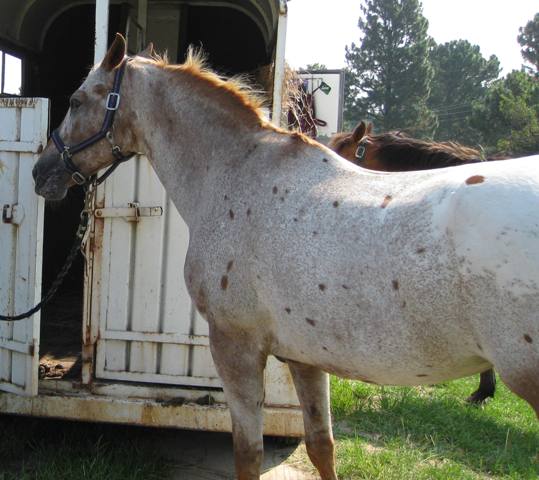
Her name is Candy and if you met her you would know why.  With strength, a racer’s spirit and her graceful great power, mostly what you notice about her is how very sweet she is.  She sure gave me a healthy dose of an antidepressant!

her spirit comforts mine

Depression is something I’ve struggled with for most of my adult life.  I’ve never been able to tolerate the side-effects of antidepressants.  I’ve turned to more traditional medicine for my symptoms.  I did once promise myself if depression zaps me to the point of not being able to get out of bed that I would take medication but the older I got the more sensitive I’ve become to the side-effects.

Acupuncture helped me when I had access to treatments.  Gardening helps me a great deal too.  When I last had a garden, my favorite part of every day was going outside first thing in the mornings and checking to see if anything had happened during the night.  Often times since I was living in the mountains, things did happen.  Little things that amazed me.  Personally, I think getting closer to nature is good treatment for depression.

The mental and psychological benefits I feel during and after riding a horse came as a surprise to me.   I don’t own a horse but I sure wish I did.

My grandpa used to buy and sell horses.  The thing about that was that he sold them way too soon for me to get to know one.

I got a taste of equine-assisted therapy by volunteering at a riding center in a small town in the mountains of North Carolina for people with disabilities.  She was about six years old.  She was amazing.  She helped me put the saddle on the horse and when we made it to the ring she stopped.

“Why did you come here today?” she asked me.

I had to think for a second.  “I came to help you ride,” I answered, which appeared to satisfy her.  She complimented me on my hair band.  I’d bought it in Texas at a cowgirl craft show.  It was my favorite.  “It’s very pretty,” she said.

Then she looked at me in the eyes and so sincerely she said, “This is the best day of my life.”

I understand better now what she may have referred to.   After having the opportunity to get to know Candy, discovering the antidepressant benefits along the way, I can relate to the feeling of having the best day of my life.

Several years after meeting the girl I started thinking of riding horses again.  One day while driving through the country I saw a sign.

“Horse lessons and Trail rides — I jotted down the number.

Not long after that day I was driving up the steep gravel drive on the small farm in a rural area near where I grew up.  The land was familiar.

Candy was gorgeous Appaloosa.  She was obviously sweet but I had no clue how spunky she was and wouldn’t find out until later when we took her to the forest on an equestrian trail.

Candy gave me good medicine.   I would come home so tired I had to go straight to bed but it felt good.

I would rest and remember how it felt being with her.  Every little turn in the trail had stuck in my mind.  I couldn’t wait ’til the next time I could ride.

I think riding a horse makes my brain produce all those wonderful chemicals depressed brains need.

I felt good when Candy listened to me too.  She certainly didn’t have to but she did.   She really wanted to do something else, which was fly as fast as she could alongside her competitive friend but she did what I asked her to do instead.  I learned to trust her.  I wanted her to trust me too.

I couldn’t believe the power she had.  She begged me to let her show off her racing skills, but I was not at all ready.  I knew I was too weak to handle her if she took off running and I could feel how fast it would be if I let her go.  I felt like we became friends in a way.  She was disappointed that she couldn’t fly but her loyalty seemed to be to me, as long as I let her know what I needed and wanted her to do.  I was sad for days that she didn’t get to run in that forest.  I felt like I had disappointed her.

There are many feelings that I experienced during the blessed time I was with Candy.

Fear, confidence, trust, excitement, accomplishment and love were all part of my experience.

The effects of the rides would last about ten days, maybe a little more.  That’s pretty darn good for one dose of medicine.

Healing and medicine doesn’t always come in the form of a pill.


I’m not a doctor or a medical professional.  This post is not intended as medical advice.

I’m just a person who discovered that building a relationship with a horse is healing.

Thank you for visiting my blog.