Antidepressants don’t always come in a pill

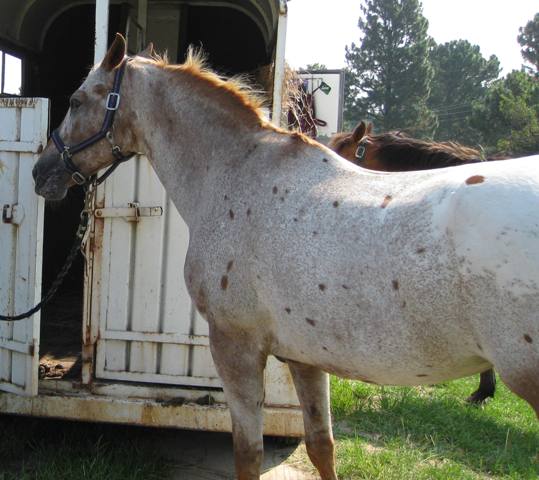
Her name is Candy and if you met her you would know why.  With strength, a racer’s spirit and her graceful great power, mostly what you notice about her is how very sweet she is.  She sure gave me a healthy dose of an antidepressant!

her spirit comforts mine

Depression is something I’ve struggled with for most of my adult life.  I’ve never been able to tolerate the side-effects of antidepressants.  I’ve turned to more traditional medicine for my symptoms.  I did once promise myself if depression zaps me to the point of not being able to get out of bed that I would take medication but the older I got the more sensitive I’ve become to the side-effects.

Acupuncture helped me when I had access to treatments.  Gardening helps me a great deal too.  When I last had a garden, my favorite part of every day was going outside first thing in the mornings and checking to see if anything had happened during the night.  Often times since I was living in the mountains, things did happen.  Little things that amazed me.  Personally, I think getting closer to nature is good treatment for depression.

The mental and psychological benefits I feel during and after riding a horse came as a surprise to me.   I don’t own a horse but I sure wish I did.

My grandpa used to buy and sell horses.  The thing about that was that he sold them way too soon for me to get to know one.

I got a taste of equine-assisted therapy by volunteering at a riding center in a small town in the mountains of North Carolina for people with disabilities.  She was about six years old.  She was amazing.  She helped me put the saddle on the horse and when we made it to the ring she stopped.

“Why did you come here today?” she asked me.

I had to think for a second.  “I came to help you ride,” I answered, which appeared to satisfy her.  She complimented me on my hair band.  I’d bought it in Texas at a cowgirl craft show.  It was my favorite.  “It’s very pretty,” she said.

Then she looked at me in the eyes and so sincerely she said, “This is the best day of my life.”

I understand better now what she may have referred to.   After having the opportunity to get to know Candy, discovering the antidepressant benefits along the way, I can relate to the feeling of having the best day of my life.

Several years after meeting the girl I started thinking of riding horses again.  One day while driving through the country I saw a sign.

“Horse lessons and Trail rides — I jotted down the number.

Not long after that day I was driving up the steep gravel drive on the small farm in a rural area near where I grew up.  The land was familiar.

Candy was gorgeous Appaloosa.  She was obviously sweet but I had no clue how spunky she was and wouldn’t find out until later when we took her to the forest on an equestrian trail.

Candy gave me good medicine.   I would come home so tired I had to go straight to bed but it felt good.

I would rest and remember how it felt being with her.  Every little turn in the trail had stuck in my mind.  I couldn’t wait ’til the next time I could ride.

I think riding a horse makes my brain produce all those wonderful chemicals depressed brains need.

I felt good when Candy listened to me too.  She certainly didn’t have to but she did.   She really wanted to do something else, which was fly as fast as she could alongside her competitive friend but she did what I asked her to do instead.  I learned to trust her.  I wanted her to trust me too.

I couldn’t believe the power she had.  She begged me to let her show off her racing skills, but I was not at all ready.  I knew I was too weak to handle her if she took off running and I could feel how fast it would be if I let her go.  I felt like we became friends in a way.  She was disappointed that she couldn’t fly but her loyalty seemed to be to me, as long as I let her know what I needed and wanted her to do.  I was sad for days that she didn’t get to run in that forest.  I felt like I had disappointed her.

There are many feelings that I experienced during the blessed time I was with Candy.

Fear, confidence, trust, excitement, accomplishment and love were all part of my experience.

The effects of the rides would last about ten days, maybe a little more.  That’s pretty darn good for one dose of medicine.

Healing and medicine doesn’t always come in the form of a pill.


I’m not a doctor or a medical professional.  This post is not intended as medical advice.

I’m just a person who discovered that building a relationship with a horse is healing.

Thank you for visiting my blog.

oops! Post deleted

Post removed by the author of this blog.


Schizophrenia and Courage

If I could stand on a cloud above, and have our Almighty God ask me what I would like to do or be on Earth, I would say I’d like to be me.

I’d say could I please be the mother of that nice little boy who turned into a fine young man!

And if our Almighty God then said to me: if you choose to be that person, you will encounter a great many challenges, some of which you will simply not know how to handle other than to accept them, some of which will make you worry through years worth of sleepless nights, and some will give you pain– I would still want to be me.

I love someone who has the diagnosis and most of the symptoms of schizophrenia.

He is so much more than any diagnosis or symptoms he suffers.

childhood art

I just watched The Soloist. What a great movie.  Hollywood usually does not impress me with movies about schizophrenia but this movie did.  It doesn’t glamorize schizophrenia nor does it promote a treatment.  We get a realistic view of how the illness effects one man’s life.

Sometimes a brain takes in too much information at once — without a filter so that anything and everything are immediately noticed and perceived.

“Try to imagine not being able to filter external stimuli,” a friend of mine who is a psychiatric nurse told me.  “Every single thing; the birds, the leaf blowing in the wind, the cars, the people on that porch next door, the smell of the bagel shop, the ant on the ground, the shadow of a tree — everything coming at you as fast as the speed of light — you don’t have a filter allowing you to choose where you put your attention.”

I imagine this would be extremely difficult and challenging, like being on the front line in a war.

I read somewhere that, we cannot know what it is like to have schizophrenia, we can only know what it is like not to have it.

Many people with schizophrenia, as with the character in The Soloist, do not like taking anti-psychotic drugs.

Most places available to help people with schizophrenia require them to take these medications to receive the help.  We have club houses, residential living facilities and other programs to help people with this type of disease — but if the people who need these services do not take anti-psychotics, then they are considered to be, non-compliant, and lose out on most assistance available that might otherwise make a huge difference in the quality of their lives.

Schizophrenia is a heart breaking disease.  It takes so much away and brings things that nobody would want.  One doctor I talked to said it is, “arguably the worst disease a person can get.”   This is a large statement to make and a complex one.  It is also one I agree with.

These are my favorite lines from The Soloist:

“His mental state and his well being is as precarious now as it was the day we met.”

“Mental Health experts say that the simple act of being someone’s friend can change a person’s brain chemistry and improve his functioning in the world.”

“I can tell you by witnessing Mr. Ayers’ courage, his humility, his faith in the power of his art;   I’ve learned the dignity of being loyal to something you believe in…holding onto it,  and above all else of believing… without question… that it will carry you on.”

Talk about a story of courage!  Carrying on in the face of this condition we label schizophrenia must be one of the most challenging quests a person must face.

This post was originally published on October 25th.

“Can you spare some change?” he asked a citizen!

The Vancouver Province's solution to troublema...

Image by sillygwailo via Flickr

How dare he ask for change in this great place we live!  A place where we are full of higher education and very busy living our green worthy lives.  How dare he bother us!

Our bags are filled with organic locally grown produce and righteously so.  Our achievements are certainly worth noting — so how dare he ask us for change!

They say he has schizophrenia so he might well, he might kill us!  You don’t know what he might do.  Did you hear in the news about that guy who…

Dial 911!  Tell them we are being harassed by a schizophrenic who is asking for change.  Put him in jail — that will teach him!

“Can you spare some change for a cup of coffee?”  he asked a citizen near the center of the lovely town considered one of the best places in America to live.

He needed fifty-cents more for a cup of coffee.

Most of the people asking for change are kept in one place and it isn’t near that part of town.

The praised area of the lovely town includes the organic market, which is the center of living green; a gathering place for locals, most of whom have a higher education.

Medical professionals, scientists, students and plenty of people with PhD’s in just about every field you can imagine patronize the market and the surrounding shops.

Students, natural healers, and many professed open-minded free-spirited folks are to be reckoned with in this great place, which is what I love about living here.

Since it isn’t illegal to ask for change then a person who asks can instead be charged with other crimes.  Harassment, trespassing and several others that will land him or her in the same jail that holds violent criminals waiting for a life sentence.  But then, I guess,  all county jails are created equal.

I had been sick and my son was not well during this time.  He was however enjoying tutoring sessions via the local literacy council.   The offices are located on the same property as the organic market.

He and his tutor were studying the Cherokee language, the learning of which is by no means an easy attempt.  The tutor didn’t know anything about the language and nobody there seemed to know about the working memory.

One thing was clear.  My son loved the class.  He absolutely loved it.  He talked about it.  He thought about it in between classes.  He was getting a lot out of the class.

He wasn’t even on the property of the market and was on a public sidewalk when he was seen asking for change, but the private security guard didn’t care.  He hadn’t cared a week earlier when I went there and asked him if we could talk.

I thought that the security guard might have some empathy for our situation if I explained to him that my son was not well and that I was trying to get him some help.  I went to see him.

He was nearly unapproachable and it was clear he wasn’t interested in talking to me.  When he did he was very rude.

“My son would like to talk to you,” I said to him.

With a look of contempt he turned towards my son who was standing by the smoking station.  Arrogantly the guard remarked,  “No he doesn’t.”

“Yes, he does,” I repeated.  “He’s waiting over there because he said you told him he could not smoke anywhere else.”

“Well.  Yes he’s right.  I did tell him that.  I’m surprised he listened.”  What a jerk.

My son walked up and held out his hand to shake the guards hand.  The man stood as still as a robot with his arms behind his back.  I wondered if he had been in the military and maybe he thought he still was!  I looked him in the eyes.  A few seconds later he held out his hand to shake my son’s, but when I held mine out he refused.

I have no idea what that man thought of me.  I dress in clean clothes.  I’m pretty clean cut overall.  I mean I don’t stand out or anything.  So why, I wonder, did that man treat me with fear of contagion,  looking at me with total contempt and only staring at my hand when I held it out as I introduced myself.

Who knows what he thought of me –the mother of a son who would ask a citizen for change?

My son apologized to the guard.  He told him he wouldn’t do it again.

I wanted the guard to care.  I wanted him to care that this young man has a mother.  I wanted him to know that I am trying to get help in this community.  I wanted him to care that we are a part of the community.  He did not care about any of that.

He said if he saw my son ask for change again that he would call the police and have my son arrested.

I was having a terrible episode of Chronic Fatigue Syndrome.  My son was not well.  His ACT team wouldn’t help so I was doing everything for my son.

A couple of days later, my son made a very poor choice and again, ask someone for change.  I had just talked to him that day and told him I was coming to town to give him some of his money but he didn’t wait.

He was banned for one year from the entire property, which not only includes the market but the grocery store, the drug store, our favorite restaurant where we’ve dined since he was a boy, along with the place where he was being tutored.

I was very angry at him but I also knew he needed professional help and he was not getting any.  None.  No doctor visits.  Nothing.

He was dismissed from the tutoring services a couple of weeks afterward.  The director said they stopped tutoring him because he has memory problems.  I pleaded.  I nearly begged them not too dismiss my son from all services.  I tried to get them to teach him something easier to remember than the Cherokee language.   I asked if it was because of any other reason –(I suspected it was related to him having asked for change) but they said no, that it was because of his memory problems.   I believe they lied.  A memory problem is part of my son’s disability.  The literacy council receives government funding so this doesn’t make sense how they could legally dismiss my son from all services because of his disability.

Why couldn’t his ACT team act?  Why couldn’t we come together and try to solve the issue and help my son?  I asked if we could meet and perhaps go talk to the guard.  Their response was they thought it best to simply leave it alone.  Do nothing.  Not even talk about it.

Why can’t we act like a community who cares not only for people in other countries but about our very own neighbors?

How can we feel so good about living green and doing right by the land and saving all the animals and doing all the zillions of good deeds, while we turn our heads to our own neighbors in need?

We believe, without knowing that someone is helping them.  We believe, without knowing, that our community is set up with services to help people, like my son, who does things we do not find acceptable, such as asking for some spare change.  We believe our tax dollars have secured such services.

I have since made sure that my son has money for coffee, but I do not want to go to that market and shop anymore.

I guess if it was an area where tolerance was not so widely professed then it would be easier to accept the kind of intolerance that seeps out of the pores of the people with power, such as that security guard.

He ought to be keeping his eye out for thieves.  But then, I guess, we often associate a person asking for some change with thieves.  I had told the guard and a friend of his had told him as well that my son is a good guy.  He didn’t care.

I have turned my head plenty times when asked if I could spare some change.  I have judged without knowing anything about the person asking.

I believe this year, in the spirit of Christmas, I will spare some change.

What is right?

My heart beats too fast and my hands shake when I think back remembering all the hospital admissions, the doctors, the pills, God… the pills!  As I write, my gut feels like it’s being ripped apart.  What if I made a mistake?

What if I made such a huge mistake that my only beloved son shall never forgive me?  And if he does forgive me, has my mistake(s) ruined some of his life already?  Has it already carved out part of who he is?

I just don’t know what is right.  I don’t know what to do.

Join a group?  There’s pretty much only one to choose from, which is through NAMI.

“Forget his liver,” I remember the young psychiatrist telling me.  Was she suggesting that I’m neglecting my son by not neglecting his liver, I wondered.  Sometimes psychiatrists think in strange ways.

“We can treat liver disease, diabetes and Tardive Dyskenesia,” the young psychiatrist said, “but we can’t treat schizophrenia without antipsychotics.”

That part about treating liver disease, well, I don’t think so.

My son’s liver panel always changes when he takes the type of medications recommended by psychiatrists.  His family physician told him, once in front of me, “never take antipsychotics again.”  He told us that they would damage his liver.  

In response, my son’s ACT team social worker and a psychiatric intern at the hospital told me that we should get a new family doctor.

“You must go against your gut,” I’ve been told by professionals in the psychiatric community.  “You must abandon everything you understand as a mother in making decisions to advocate for treatment,” a well-respected social worker once said to me. 

“Treatment,” ultimately can mean forced injections.   The social worker added that if she was a parent in my shoes, that she truly didn’t know what she would do.

“We’ll commit him for not taking medicine and keep him there until he gets so tired of it he will do anything to get out, even accept regular injections of anti-psychotics.  We’ve had to do this many times with patients like your son — who are consistently non-compliant in taking their meds,” his psychiatrist has suggested.

“He wouldn’t have rehabilitation there,” I told the psychiatrist after she threatened to send him there if he, “made one wrong move.”  My son is not a criminal.  He gets sad and lonely and out of sorts.  He isn’t out breaking the law. 

The doctor had a bad attitude and let her personal feelings get too involved.  She was angry because the day before my son had gotten out of a car in town, instead of going to his apartment, while riding with one of the team’s social workers.  He’s an adult and can get out if he wants to whether anyone likes it or not.

“The only thing he would be able to do up there since the psychiatric rehabilitation unit is full would be sit in their community room all day, watching television with patients who are much worse than he is,” I told her.  She reminded me again that this was an effective technique to get some patients to decide to take medication.

I feel like I’ve had to give my son over to the enemy.  I feel like I agreed to join them too — but never with my whole heart or without the ongoing feeling that there must be a better way to do things than the way our modern-day psychiatry does them.

I stopped going to the support groups because there is a collective attitude that supports denying another person’s human and civil rights.

I once told my son’s psychiatrist about research suggesting that people with diagnoses, such as schizophrenia, can recover.  She hadn’t heard about the studies nor had she ever read anything about treating schizophrenia in ways outside of antipsychotic medication.   Personally, I find it disturbing that she’s been a psychiatrist for more than twenty years, yet hasn’t taken time to read about other forms of treatment. 

We need an alternative.  My son and I, and possibly many other families, need people to join an exploration in healthy ways to treat “mental illness” and we need to start a conversation about recovery.

“What causes schizophrenia?” someone asked a famous psychiatrist who was speaking at a meeting I attended.

“Nothing,” the doctor replied.  “Nothing and everything causes it.”

I don’t have the answers.  I do believe that if we had places where we can find what a former professor of mine called, “The Three Ms’,” that healing could happen.  “Meaning, Mastery, and Membership,” he called them.  “People will go crazy without these things,” he said to our class one day.


Thank you for visiting Dogkisses’s blog.

Fibromyalgia misunderstood.

my magic bike

“He said you are very sweet,” the physical therapist said during my assessment.  I missed some of her words, due to a language barrier, but I heard the last part of the sentence when she said, “but he said you have not shown much improvement.”

I felt insulted.  Waves of emotions swelled up inside of me.  I’m sure she did not intend to insult me but I felt it anyway.  I had improved! Wasn’t that in my records I wondered.

I’ve had treatment for fibromyalgia pain there twice.  The first time I went to the warm therapy pool for a couple of months and they are right, I did not “improve,” at least not in the way my insurance company wanted me too, which I guess meant that I was cured.  I did have a great couple of months but insurance companies do not count this as improvement.

The second time I went there for fibromyalgia pain was about six months ago. My therapist and I decided together to do dry-land therapy instead of aqua-therapy, even if it meant me tolerating a bit more pain for a while.

I began to see a pretty big difference in my level of pain around the fourth week of doing the exercises.  My therapist is great, especially because he is well read and current in his knowledge of fibromyalgia.  He does not believe in causing pain.  I like that.

As my pain level went down my mood went up.  I really liked that!  Suffering from depression all the time is depressing.  I began to feel hopeful, feeling like I had some control, like there was something I could do to make things better.

Deciding I was ready to do my exercises at home my therapist gave me pictures and the long rubber bands to take with me.  I did well for several weeks.  I did my exercises, got in time on my magic bicycle and of course walking my dogs.  I could see muscles forming on my somewhat stringy arms and legs.  I was getting stronger.

Then I had a setback in life.  A really hard setback.  One that caused me so much grief I stopped doing my exercises.  It didn’t take long before my pain level was rising and my muscles were disappearing on me once again.

But what about the months I did so much better I was thinking while I was in the physical therapy assessment the other day.  What about the fact that for a while, I did improve, which means that I can improve?

After talking with her a couple more minutes I realized she didn’t know why I was there, which was because I hurt my arm and shoulder when I fell off my magic bike on Halloween.  She thought I was there because of fibromyalgia, again.

I explained this to her but she asked me three times if the pain was from the bike fall and not fibromyalgia.  I wondered about that.  I thought me telling her one time, along with the fact that she had a referral from my family doctor as to why I was there ought to be enough.  Did she think I was making up the accident? I pulled up my sleeve so she could see the gash in my elbow, which apparently convinced her.

The other therapist had never sent me out of there in pain.  This woman did and I hurt for two straight days.  I felt like she did not believe I was in the amount of pain I was in.

Presently, I can only lift my arm halfway up from my side.  Doc says this is from the, “tendon adventure,” I went on.

Many things she asked me to do hurt.  My family doctor had examined me and discovered gently without causing me pain which tendon and ligament he believed to be the ones that went on the “adventure.”  Each time I said, “that hurts,” he stopped.  But the PT I saw would just look at me when I said that hurts as if she did not understand.

It was a frustrating experience.  I was upset when I got there because of the crazy guy I had a crazy relationship with.  She blamed my nervousness on fibromyalgia but I knew what was wrong with me.  It might make the fibromyalgia worse, in fact I’m sure being upset does, but it wasn’t fibromyalgia that had me so upset.

“You are nervous.  You can’t relax,” she kept saying as she held my arm in positions that were really hurting me.  Well, no shit!

Finally she said she would end the session with the machine that sends electrical stimulation to the nerves.  I’d had it on my neck and back before and never had been impressed but also never felt any pain so why not I thought.

That thing felt like knives stabbing in me!  I was surprised and so was she.  She also laughed just a little when my legs came up against my chest after she had turned it up a notch.  I however did not laugh!

I became more distressed.

I told her I wanted to have aqua-therapy again.  I knew my therapist would be in the pool.  I also asked her if she would consult with him.  I’d already decided I was not going to come back and have another session like that one.  She was nice and when she came back from talking to him she had papers for me to sign.  He had agreed with me on the no pain part and that the warm water exercises would be a better approach since I am in so much pain.

Thank God for the few good doctors.  Thank God for the few good medical professionals who study and keep up enough to know they cannot assume they fully understand fibromyalgia.  It is the doctors and other providers who realize this who are the best ones.

Medical professionals who think they understand and have all the answers regarding fibromyalgia, while the smartest scientists are still scratching their heads,  are the ones who I am leery of.

I didn’t like it when that physical therapist, even though she was nice, kept on blaming my upset that day and the pain in my arm on fibromyalgia.

“You have fibromyalgia,” she said, “so you cannot relax.”

I had a boyfriend who was a narcissist I thought to myself and that was why I couldn’t relax that day.   I had spoken to him only hours before!

She was also pulling my injured arms in ways that was causing pain, which was not causing me to feel relaxed.

I’ve had many things blamed on fibromyalgia that shouldn’t have been and had fibromyalgia used to explain other things that are not fibromyalgia.

It’s a crazy world sometimes!


A Man without a Heart

“Life is all about the Narcissist, and while they learn to “feign” or act emotions, they are essentially cut-off from their own authentic feelings, –They seek to dominate and control others as a primary way of navigating life.” 

Source: Narcissism as Prophecy, by Richard Boyd, Body Mind Psychotherapist, Energetics Institute, Perth, West Australia.

“I don’t have feelings for anyone, not you or anyone else,” he said, immediately after I told him I was sad and having a hard time with my feelings. 

“I’m thinking about ending my life,” he added.  “I have a 45 and I know how to use it.”

The man was lying about ending his life.  The reasons for his statement was to play more mind games with me.

“Can you imagine for one minute that maybe it’s the truth that I don’t have any feelings for anyone?”  he pleaded

I can now.

By all definitions, he fits the description of a person with severe Narcissistic Personality Disorder.  Eventually, he went as far as to claim having been diagnosed, but I knew that was a lie too.

Our relationship was a lie.  He certainly took pride in his ability to convince me that he loved me and that his, “love was the kind that last forever.” 

He proclaimed over and over that he wanted to spend the rest of his life with me.  He literally begged me every day for the best of six months to believe he was truly in love with me. 

I hadn’t believed him.  I continued suggesting that he was in a delayed mid-life crisis and was merely infatuated with me.  This only fueled his wish to convince me otherwise, plus I was wrong.  His intentions towards me and our relationship didn’t come close to the innocence of a temporary infatuation and there wasn’t any mid-life crisis going on.  

I had trusted him as my insurance agent for over twenty years before he spotted me at a low ebb in my life, and took full advantage of that in every way possible.  I believe it was my longstanding trust in him that in large part, caused me to question my doubts and slowly abandon my screaming intuitive urge to get very far away from him.

Upon reflection, I can see how unfortunately perfect I was for him.


“Rosa la Rouge” was her name.

by Henri de Toulouse-Lautrec (French, 1864-1901)

A-Montrouge Rosa la Rouge

I gazed into the small framed print for a few minutes wondering if I should spend money on something I didn’t need.   I was after all, at the thrift shop and had already chosen several items  from the art room.

I almost put the picture back, but I looked at it again.  I wondered what had drawn me to it.  There wasn’t anything that especially stood out to justify the purchase, albeit a modest one, except that I really liked it.  I decided that was enough.

As I write, over a year later, I remain captured by the woman in the picture.  

At Montrouge (Rosa La Rouge), by Henri de Toulouse-Lautrec.

Sometimes I take the picture down to take a closer look.  I want to understand what I feel when I look at Rosa.  

She’s mysterious and I wonder what she’s thinking.  I wonder where she is and where she’s going.  I wonder if she’s happy or content.  I think she has something on her mind.  More than that, I think she has a difficult life.  I’m rather delighted that this image evokes so many questions!

My sister came to visit me one day and remarked about the picture.  “She looks just like you,” she said.  “Exactly.”

I hadn’t thought about it, but oddly, I wasn’t especially surprised.  Looking again I saw a resemblance, but not as much as my sister saw.   It’s rather a feeling than her physical features that I relate to.

Rosa la Rouge was a French washerwoman; a laundress, which wasn’t an easy life.  They had a reputation of also being prostitutes.  Having learned that Rosa was likely a French prostitute evoked more curiosity about what I feel when I look at her portrait.

My first impression of Rosa made me think of a woman living the life of a poor share cropper’s wife.  I saw a woman trapped in a life of obligation.

Perhaps it is a certain loneliness in her that I see.   An alienation from the world of nine-to-fivers; the regular people who get up at the same time and go to the same place every day.  Regular people with regular jobs and regular relationships.

I imagine being a prostitute would call one to abandon, at least temporarily, a part of herself.  

So, I wonder about Rosa la Rouge.  What is it about her that intrigues me?

Is something lost to her?  A part of herself that she waits to meet again.

Is something lost to me, I wonder, when I see my reflection in Rosa’s image.


Henri de Toulouse-Lautrec (French, 1864-1901).

“Toulouse-Lautrec was drawn to Montmartre, an area of Paris famous for its bohemian lifestyle and for being the haunt of artists, writers, and philosophers.”

source: http://en.wikipedia.org/wiki/Henri_de_Toulouse-Lautrec

“Rosa la Rouge was a prostitute who appeared in many of Toulouse-Lautrec’s paintings.  Sadly, she is thought to be the source from which the artist contracted syphilis, a then-incurable disease which may have contributed to his early death at the age of 37.”

source: http://www.artcyclopedia.com/masterscans/l28.html

Thank you for visiting Dogkisses’s blog.  Feel free to leave a comment. 


Related articles